
Graze Against the Machine
Brandish your weapon and fight back

The tentacles of the Machine have pervaded into and latched onto nearly every nook and cranny of modern life. Have you ever seen a young child, just developing manual dexterity, grab a blueberry between their finger and thumb, pressing too hard and squishing out the yummy juicy contents and leaving only the dry skin pinched between the fingers yielding a disappointed frown? Well the fingers of the machine have grabbed a hold of us and this is our chance to don our armor, sharpen our blade, and fight our way out of its tightening grasp. The good news is that the tighter one seeks to grab onto something, the easier it is to slip through the cracks between fingers. So maybe our metaphor requires not armor and steel to fight, but greasing up with grass fed butter to slip through the tightening tentacles of the machine. Perhaps I’m getting ahead of myself.
Fifteen years ago environmentalist friends and I would sit in the neighborhood bar discussing how it felt like a Machine was capturing humanity - how it was becoming nearly impossible to eat, move around, heat your home, or buy a beer without government or corporate permission via centralized and captive supply chains, energy systems, and financial institutions. We were hopeful that movements like Occupy would be contagious and that decentralized systems would begin to emerge around the world. We were putting solar panels on our houses and gardens in our front yards. It is now clear that decentralization is much more difficult than we thought. The centers of power are hell bent on centralization, not just for reasons of economic efficiency, but as the main mechanism for control. Henry Kissinger once famously stated that “Who controls the food supply controls the people; who controls the energy can control whole continents; who controls money can control the world.” Well now the people, the continents, and the world are under the control of the Machine - but that's not all. The Machine is now in the process of seeking control of the individual human mind and behavior.
With the explosion of digital technology, social media algorithms, artificial intelligence, and programmable digital currencies, the Machine has developed mechanisms to manipulate our thinking and feeling, and thus leverage control over our actions. Our head, heart, and hands are the new targets for control. Human thoughts and actions are best manipulated by provoking the feeling of fear. People caught in the grips of fear are often willing to make illogical decisions against their own interests in order to assuage that fear. Perhaps the most egregious use of fear mongering is through the narrative of climate change. Discussions of human induced climate change have been a part of the scientific discourse for the last 50 years. Early on, it was the worry of an ice age. Now, it is runaway global warming caused by human emissions of carbon dioxide. Because humans are responsible for carbon emissions from driving cars, eating meat, and breathing, it is the human population that now must be controlled by a technologically omniscient elite in order to prevent planetary catastrophe. At least that's what the Machine wants us to think.
The concept of climate is too big and complex for any single person to fully conceptualize its dynamics, much less work out a strategy to change it. I remember back in the good old days of environmentalism, activism was focused on actual places. Activists tried to stop highways from plowing through a specific wildlife refuge or coal companies from removing the top of a specific Appalachian mountain. The integrity of specific streams, rivers, wetlands, forests, and mountains, with known names were fought for. Now, activism is focused on an abstraction - something we can not see or touch, or even grasp. And because of that, we feel helpless. The feeling of helplessness leads us to look for solutions at the top - from governments and corporations.
Unfortunately, the totalizing narrative of climate change is here to stay. Because it induces fear of extreme and palpable calamity, it is the perfect narrative to justify further control over humanity. And because it also induces individual and collective guilt for past carbon sins as the cause of catastrophe, it reduces the probability of popular backlash to those control measures. That guilt makes us feel like we deserve to be forced into servitude. I was speaking with friend recently who said we were all burning too much carbon and fossil fuels and that the only way to save the planet from imminent destruction would be for a totalitarian one world government to force all humans on Earth into low-energy lifestyles. The Machine is succeeding in convincing some people to actively promote their own enslavement.
As an ecologist, regenerative rancher, self-sufficient homesteader, and low-energy lifestyle enjoyer, I am, perhaps more than most, dedicated to restoring health for Earth and humanity. A healthy planet with healthy soils that produce healthy foods is a future scenario that we can all agree on, regardless of our political proclivities. But that is not a future that the global enslavement of humanity will bring about. The forces of the Machine, hell-bent on building new energy-slurping data centers, plastering over ecosystems with solar panels, sending swarms of surveilling satellites into orbit, and centralizing our polluting and ecosystem-destroying food system, are not going to magically decide to “save the Earth." Since its inception, the Machine has been desperately trying to conquer Nature. Unfortunately, the technology necessary to succeed in this suicidal mission has been fully developed. Fortunately, we still have a remnant of sovereign humanity as the last remaining bulwark preventing the full conquest of Nature and the human soul (they are connected).
If we want to avoid a hellish future we must fight back now. We must reclaim our humanity and sovereignty. But how to do so? First, we must reclaim our souls - our thoughts, feelings, and actions. We must not allow the media pouring into our consciousness via our screens to trigger us into states of submissive fear and confusion. We must remain objective, rational, loving, and compassionate in the face of polarizing and dehumanizing headlines and content. We must value our family, friends, elders, and neighbors even when we're told to despise them. We must continually try to see the divine spark present in all peoples, even when they are disagreeable. We must be skeptical of the narratives of power and compassionate to the stories of the real people around us. By reclaiming sovereignty over our thoughts, feelings, and actions - our souls - we can begin to reclaim our peoples, continents, and world. Remember what Kissinger said that he “Who controls the food supply controls the people.” This is the first and most important lever of power to wrest back from the powers that be.
Our food system has been centralized and is controlled by just a few corporations. Behemoth agribusiness corporations like Monsanto and Syngenta control the genetics of our crops, the chemicals used to grow them, and the infrastructure to process the yields. Tyson and Smithfield control the production of chicken and pork, and JBS, Cargil, and Tyson control the bulk of the slaughtering plants that turn live animals into consumable meat. Even though the slaughtering plants have been centralized (4 companies control 85% of the market), there is one last productive industry that has not yet been centralized. The production of cattle on the ranches where the momma cows have their calves are still largely decentralized composed of independent family farms. Although there has been a trend towards centralization in the feed lot side of the equation, where young beef calves are fattened on corn, the production of calves is somewhat immune to centralization. Farrowing baby hogs can be done by the thousands in giant buildings. Incubating millions of chicks can be done efficiently inside. These natural processes can be converted into assembly line procedures in a factory.
But big momma beef cows having calves can really only be economically done outside on grass. And that's a beautiful thing. Because it can't be made efficient, and it can't be done in a factory. It takes large enough rangeland and it takes thoughtful and observant ranchers to monitor the mommas, making sure they have sufficient nutrition and clean pastures to grow healthy babies. As a result, the cattle industry has fortunately remained relatively decentralized.
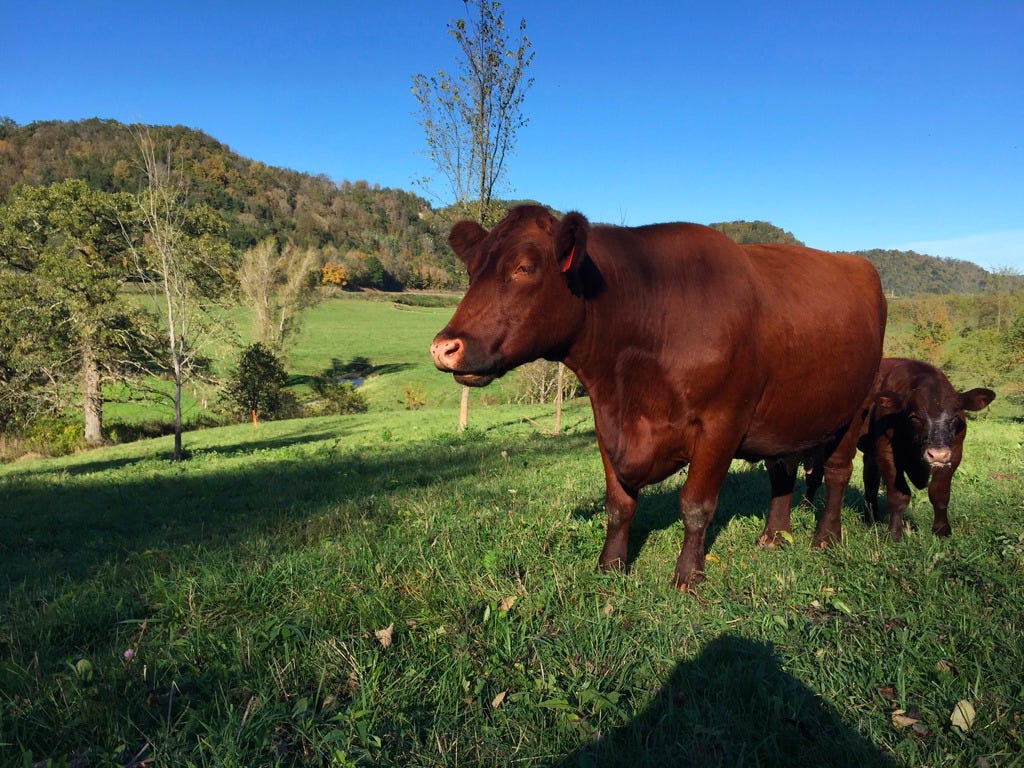
Perhaps that is why the cattle industry is in the crosshairs of the Machine right now. In its attempt to leverage full control of the food system, beef is the last remaining bulwark of a free and independent productive populous. And because bovines, like all mammals, produce some flatulence as a byproduct of their digestive processes, they have been identified as primary infringers against the climate gods, through the release of greenhouse gasses by their living and eating. Cows and their meat have become the offering we must sacrifice to make amends for our climate sins. Bill Gates has suggested that “all rich countries need to move to 100% synthetic beef.” That way, there are no more farting cows, and the protein that people rely on can be produced in a lab in a way that is 100% controlled by one or two companies (in whom Gates holds shares, of course).
The conventional beef industry is, although somewhat decentralized, largely environmentally damaging. Although not as egregious as the indoor pork and chicken factories, the conventional beef feedlot is not the most environmentally friendly operation. The large ranches in the South and Southwest that produces the cows and calves are one thing. Cattle on these ranches range on grass with minimal inputs. But those calves are then sent to feedlots where they are finished in confinement on grains. These are input heavy productions with vaccines, artificial hormones, and GMO grains. Fields are tilled, sprayed, and harvested in monocultures causing water and air pollution, soil carbon oxidation, plus all the emissions of the tractors and equipment in the process. Modern industrial agriculture is the largest culprit of carbon emissions. So, because conventional beef feedlots utilized these industrial grains, they are complicit in the ecological destruction of industrial agriculture. Conventional dairy production is similar. Dairy cattle are fed a diet high in corn and soy, because it makes them produce more milk. So it is true that conventionally produced beef and dairy is environmentally damaging and contributes to excess carbon emissions.
Regenerative grazing, on the other hand, is the thoughtful, adaptive management of livestock to improve the ecological health of the land and soil. Appropriately timed and scaled grazing helps enhance pasture diversity and productivity while building topsoil and providing habitat for a host of insects, birds, mammals, and plants. The grass-fed beef and dairy produced as a byproduct of regenerative grazing systems is nutrient dense, delicious, and enhances human health and well being.
Because regenerative grazing builds topsoil, it sequesters carbon. When plants are grazed and then allowed to rest, some of the carbon fixed from the atmosphere by the plants gets incorporated into the soil through trampling and root sloughing. Healthy soils contain microbes that decompose that plant material in the ground, creating organic matter, or soil carbon. When livestock are managed appropriately, each cycle of grazing can lead to the creation of soil through carbon sequestration. As long as the soil remains intact and is not plowed or tilled, that carbon will remain stored underground indefinitely. Atmospheric carbon sequestration and storage technology exists now in the form of intelligently managed grasses and ruminant grazers. The prairies of the Midwest, burned regularly by Natives and grazed by bison, elk, and deer, generated up to 20 feet of topsoil in a few thousand years. That is a tremendous volume of atmospheric carbon sequestered and stored in the soil.
Regenerative grazing, therefore, offers a solution to climate change - even within the framing of the climate change narrative itself. But perhaps even more importantly is that even more so than conventionally produced beef and dairy, regenerative grazing can not be centralized and controlled. Finishing high quality beef or running dairy cows on pasture requires intelligent and adaptive grazing. Producers are thoughtful and must adapt management practices in real time based on weather patterns and feedback from their unique landscape and the animals they manage. Regenerative grazing, therefore, can't be standardized, centralized, or controlled. It must remain local and decentralized. A local and decentralized source of healthy and nutrient dense food is exactly what humanity needs most right now to begin wresting back sovereignty from the Machine.
There is one action we can make every day that will benefit our personal health, help heal the land, reclaim our individual freedom and sovereignty, and make impotent one of the Machine's most effective weapons - fear and guilt.
Eat grass-fed beef and dairy that you purchase directly from a farmer or rancher. It's that simple.
Find a regenerative farmer or rancher in your region and figure out how to buy meat or milk directly from them. It might not be quite as convenient as Walmart or Amazon Fresh, so your act of health, freedom, and defiance might require a bit more time and energy spent on acquiring food than is currently routine. Also, purchasing directly from producers means purchasing whole foods. Especially meats. So those meats must be cooked - not near as convenient as purchasing pre-cooked meals or going out to eat. And you may not be able to buy processed dairy products from a local farm. But you can learn to make your own butter (all you need is a jar!), yogurt, and cheese from raw grass-fed milk. It's way better quality when you make your own. Once you start, you won't be able to go back to store bought.
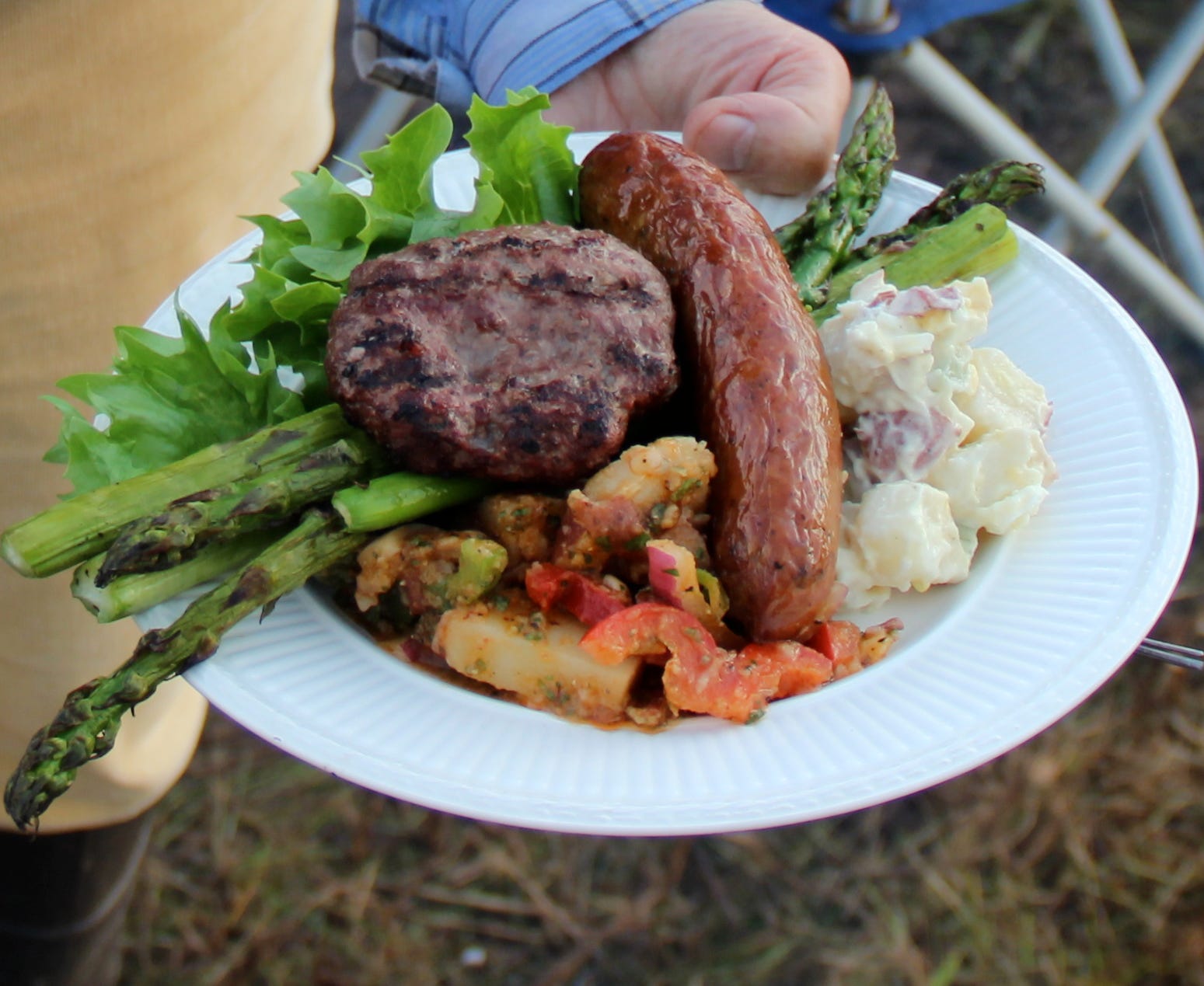
Buying directly from farmers will also be more expensive. Small farms don't have the efficiencies and economies of scale that significantly lower input costs and thus prices. Buying local grass-fed beef and milk directly from regenerative ranchers won't be the cheapest option. And that's a good thing. Cheap food comes with massive embedded negative externalities including soil and water pollution, inhumane working conditions, the centralization of power, and control over the food system. So if we want control of our food, we're going to have to pay for it. It's a small price to pay for helping to heal the land, rebuild an independent and local food system, and defeat the Machine at its own game. Plus, it's delicious!
The time to Graze against the Machine is now. Tens of millions of acres of agricultural land in North America are changing hands right now as the older generation of farmers retire without children taking over their operations. With record cattle prices, many ranchers are selling their herds and retiring. In order to insure that some of this land is regenerated and used to rebuild food sovereignty, there must be massively increased demand for locally produced grass-fed beef and dairy. As demand rises, more and more farmers will be able to start up or transition or to regenerative grazing. There are many services today that offer cheaper home delivery options for grass fed beef. You can buy grass-fed beef at Walmart for $5 a pound. Be wary of sophisticated greenwashing and marketing wizardry. Remember, the USDA has no required country-of-origin labeling law, so companies can market beef from China, Brazil, or Mexico as “Products of the USA.”
The solution will not be found in the super market, and it certainly won't be the cheapest or most convenient option. It is absolutely critical that you purchase your food, as much as possible, directly from farmers. This is the only way to ensure a fair price for the farmer, so that they can continue doing what they do - which is intelligent, difficult work. You can find local farms at your local farmers markets or on sites like EatWild and BeefMaps. Many farms and ranches now ship directly to your door like we do across the upper Midwest at mastodonvalleyfarm.com.
The wrench we must throw in the Machine is a fork, and we can brandish our weapon three times a day, every day.
With each meal, let's choose the option that regenerates the land, restores our health, and rebuilds our sovereignty. We have no time to lose. So take the pledge with me, starting now, to buy as much food, especially grass-fed beef and dairy, directly from farmers in your area as possible. Work on increasing your cooking skills and prepare delicious meals for yourself and your loved ones. Watch your health improve, your landscape become more beautiful, your community more prosperous, and smile as you slip right through the iron grip of the Machine.
It is sad that most environmentalists are funneled towards the eco-modernist solution of the Machine, whereas the regenerative options are actually far more consistent with their ethics and worldviews. The demonization of cattle has surely played a large part in this. We need more environmentalists aligning with the efforts of regenerative farmers.